
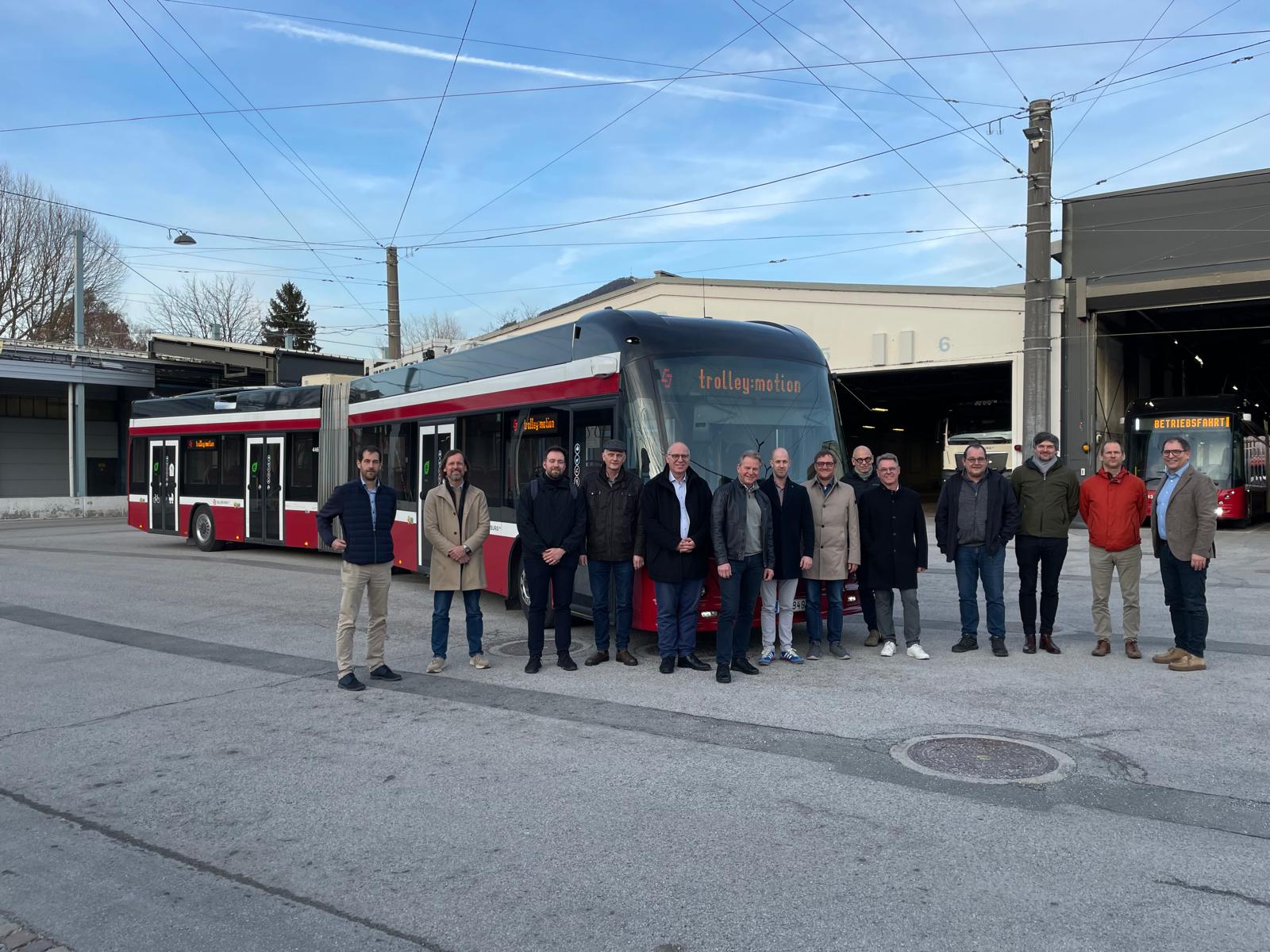
What participants gained:
- Overview of modern procurement strategies
- Insights into implemented procurement models
- Comparison of technical and performance specifications
- Exchange on sustainable and circular procurement approaches
- International perspectives
- Tools and modular tender templates
- Networking opportunities with experts from public transport companies
- Presentation of best practices and international examples
On the second day, a CE4CE workshop was held, in which CE4CE the key question was: How can circular economy principles be practically integrated into public fleet procurement and operations?
A strong best-practice example came from Bergamo. ATB Mobility, together with Kruch Railway Innovations, is implementing sensor-based monitoring, predictive maintenance and a digital twin to optimize energy flows and infrastructure performance. The approach is complemented by a 1,000 kWp photovoltaic system, battery storage and second-life strategies for traction batteries
The strategy was presented within the Interreg Central Europe project CE4CE by Redmint Impresa Sociale. The core message was that circular procurement starts with operational profiles, technical specifications and lifecycle thinking — not at the recycling stage.
Key takeaways from the event:
- Digitalization enables predictive maintenance and extends asset lifetime
- Circularity criteria can be embedded in public tender procedures
- Cooperation between operators, technology providers and EU projects is essential