
The visit took place at the University of Zagreb, the oldest and largest university in South-Eastern Europe, which plays a leading role in research and higher education in Croatia. The Faculty of Mechanical Engineering and Naval Architecture, one of the country’s leading technical institutions, provided the main venue and showcased its research, infrastructure and innovation activities.
A central highlight of the visit was the presentation of the faculty’s comprehensively reconstructed and energy-renovated campus, officially reopened in 2025 following extensive reconstruction after the 2020 Zagreb earthquake. The renovation represents an investment of approximately EUR 75–80 million, covering more than 38,000 m² of university space and financed through EU and national funding sources.
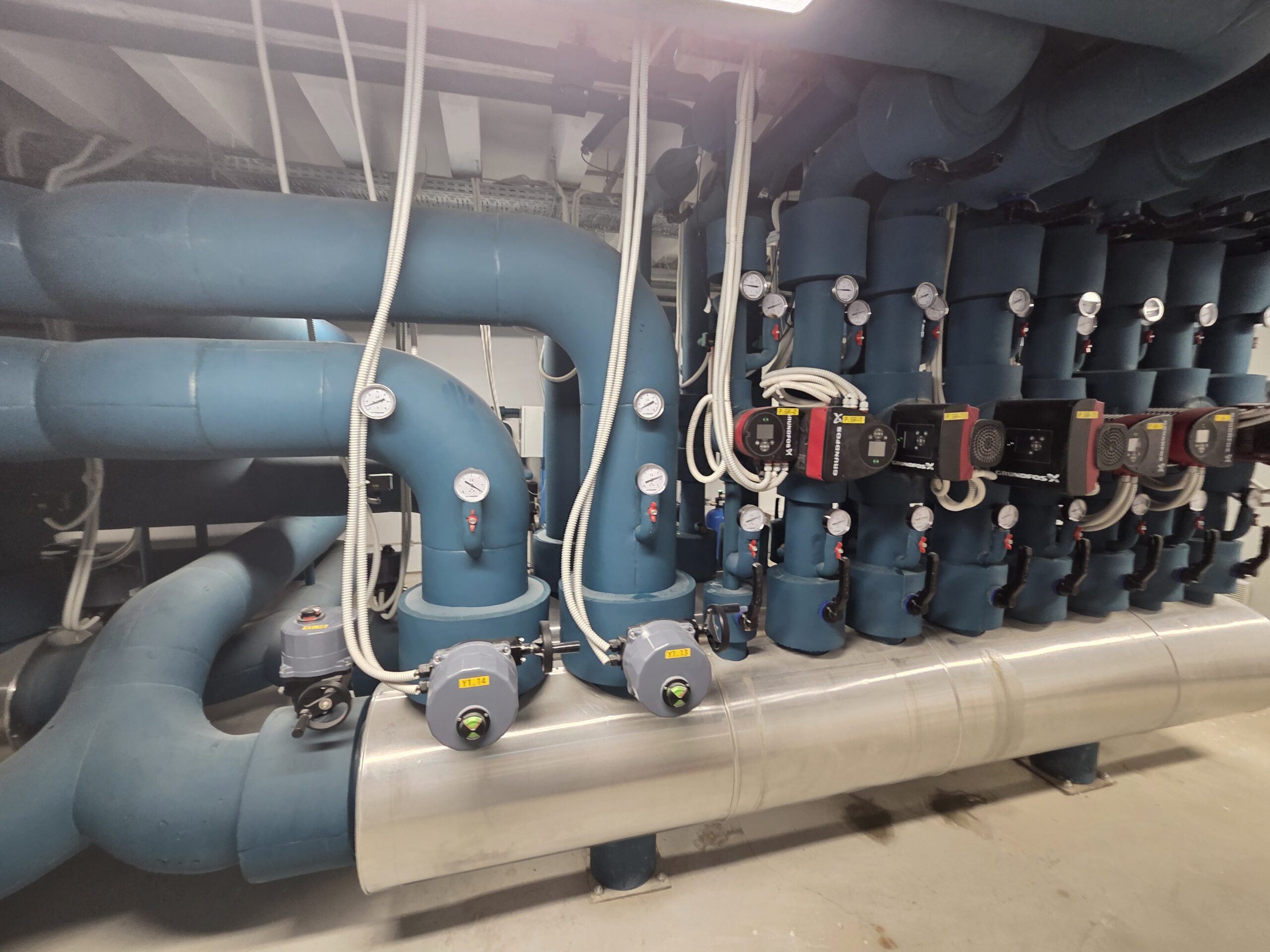
Participants had the opportunity to explore the upgraded campus infrastructure, including photovoltaic systems, geothermal energy utilisation, and advanced heat pump-based heating and cooling systems. The buildings integrate multiple renewable energy technologies and energy-efficient solutions, resulting in significant improvements in energy performance and reduced consumption.
The renovated campus is designed as a living laboratory, enabling real-time monitoring of energy systems and providing an advanced environment for education and research in sustainable building technologies and energy transition solutions.
A particularly engaging part of the programme was the visit to the Hydrogen Laboratory, where participants were introduced to research on the production, storage and application of green hydrogen produced via water electrolysis powered by renewable energy sources. The laboratory develops experimental systems combining photovoltaic, electrochemical and hydrogen technologies, including fuel cells and energy conversion applications. The visit also included a demonstration of a hydrogen-powered bicycle, illustrating practical applications of hydrogen technologies in sustainable mobility.
The study visits also included additional laboratory demonstrations in the fields of energy systems, geothermal energy and heat pump technologies, highlighting the faculty’s strong research focus on decarbonisation and clean energy innovation.
The event provided an important platform for knowledge exchange between project partners and SMEs from Austria, Poland, and Croatia, while also highlighting the strong role of industry in driving the green transition.
During the visit, participants were able to observe real-life examples of how different companies contributed to the building renovation, showcasing integrated solutions in energy-efficient refurbishment, modern installations, and the implementation of renewable energy systems. This
included improvements in heating and cooling systems, reductions in overall energy consumption, and the installation of a rooftop solar power plant to cover part of the building’s electricity needs.
Overall, the renovated facility represents a tangible example of decarbonisation in practice, exactly the kind of transformation promoted and supported by the CREDIT4CE project through the combination of infrastructure investment, innovation, and cross-sector collaboration.