
Key milestones and climate resilience insights from Forchheim
Our project is officially entering its final phase. To mark this pivotal stage, project partners recently gathered in Forchheim, Germany, on June 17-18 for a crucial milestone meeting. The two-day event focused on reviewing technical progress and exploring real-world climate adaptation strategies in the field.
Reviewing tools and pilot outcomes
A major focus of the sessions was evaluating the practical tools developed throughout the project’s duration. The project team achieved two core objectives:
-
We summarized the completed testing phase of our newly developed risk and vulnerability assessment tools.
-
We reviewed the comprehensive outcomes of pilot actions conducted across Europe.
These pilot actions and tools tests allowed us to work directly with local heritage managers, municipal authorities and climate experts to evaluate exactly how future climate change and hydro-climatic risks will impact vulnerable heritage sites.
Field study: Heritage and climate adaptation in practice
The meeting was complemented by a study visit to the rural areas surrounding Forchheim – a region renowned for its rich cultural landscape. The team explored two distinct sites that bridge tradition with climate resilience:
- We visited historical irrigation systems that are currently inscribed on the UNESCO Intangible Cultural Heritage list. This site perfectly illustrates the intersection of cultural and natural heritage, serving as both a historical asset and a crucial habitat and feeding ground for local wildlife species.
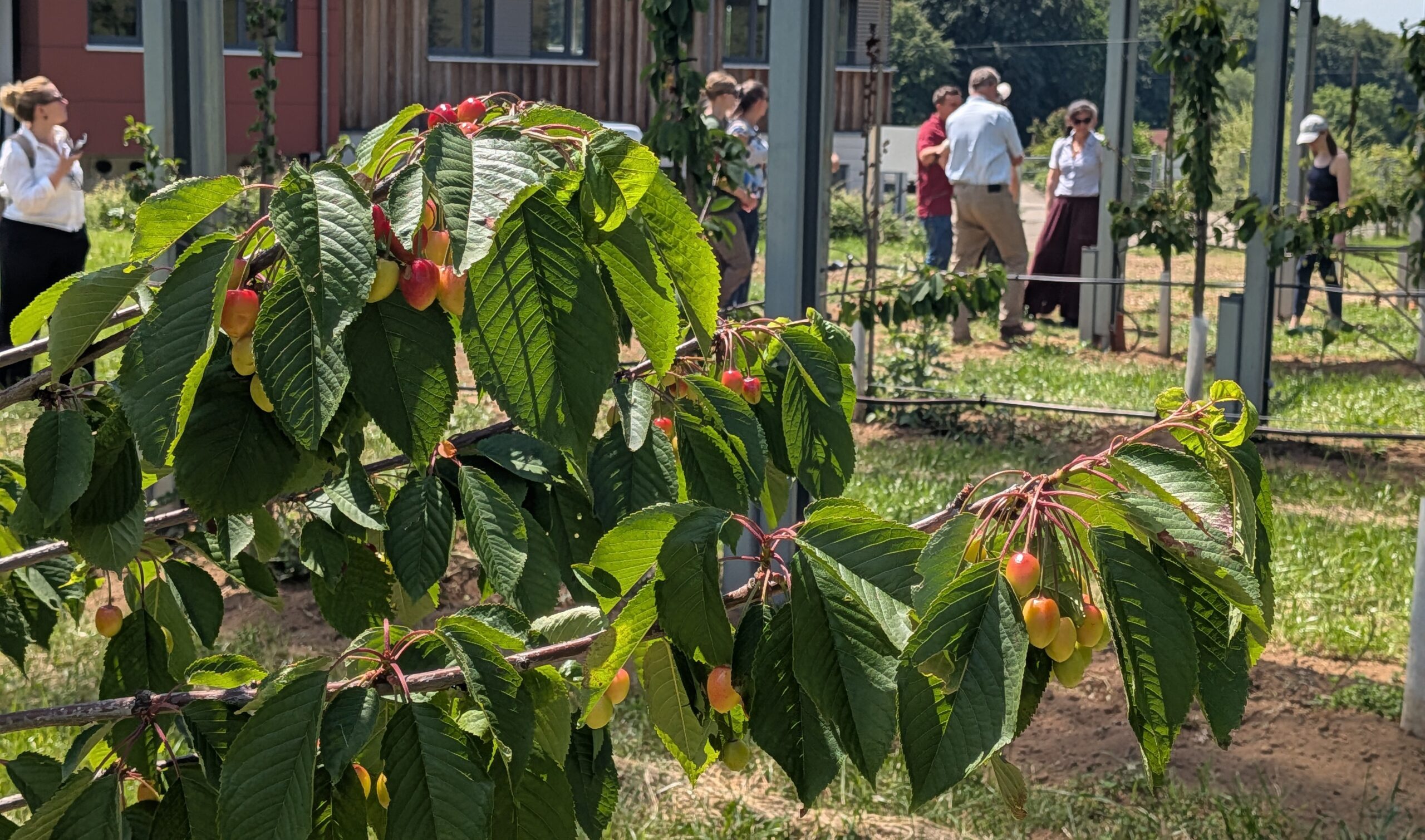
- The team also explored the region’s expansive cherry orchards, a defining element of the local Franconian landscape. We visited an experimental breeding station where new crop varieties and innovative cultivation methods are currently being tested.
These efforts aim to enhance the resilience of fruit farming against accelerating climate change – a vital step to preserve local traditional practices and maintain this unique cultural landscape for future generations.