
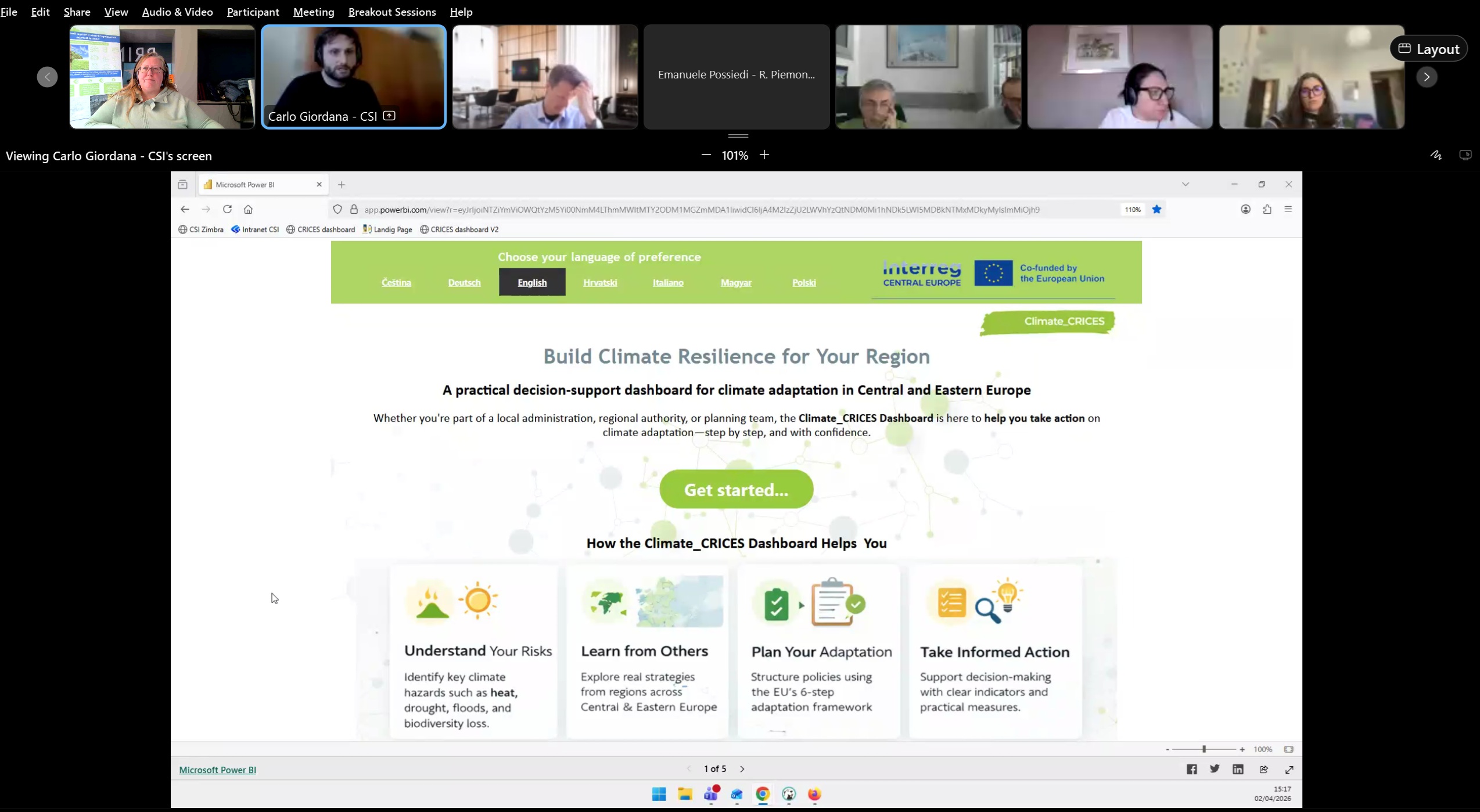
The event aimed to present updates to the Climate_CRICES dashboard, gather stakeholder feedback, and explore synergies with the Horizon Europe Mount Resilience project. While Climate_CRICES focuses on strategy development and consolidation, Mount Resilience complements this by supporting implementation through data and tools tailored to key actors such as river basin authorities.
Key Discussions and Activities
The session opened with an overview of the Climate_CRICES project, followed by a demonstration of the revised dashboard. Participants engaged in a dynamic discussion on how the platform can support policy development and complement other tools under development.
A central focus was the role of pilot activities in supporting the integration of climate considerations into the Piemonte Regional Climate Change Strategy—particularly in mountain areas, where impacts are intensifying. These activities will contribute to an Addendum providing scientific support on:
- Heat and drought
- Water scarcity
- Flooding
- Biodiversity (with specific relevance to mountain ecosystems)
Insights from Stakeholders
The meeting gathered valuable feedback from 14 participants, primarily regional officials working in agriculture. Several key insights emerged:
Limited initial awareness
Participants demonstrated partial knowledge of climate impacts, particularly drought, with a stronger focus on practical responses rather than systemic understanding.
Value of the dashboard
The Climate_CRICES dashboard was recognised as a useful entry point for accessing climate data, although improvements in territorial detail are needed.
Need for cross-regional data integration
Stakeholders highlighted challenges in managing shared resources such as river basins, stressing the importance of better integration of data across regions and countries.
Role of technical experts
Technical professionals, especially in water management, showed strong engagement. While they found it challenging to immediately apply the dashboard in daily operations, they appreciated its innovative comparative approach to analysing strategies.
Priority risks
Drought and flooding were identified as the most critical risks for the agricultural sector, though all climate impacts addressed by the project remain relevant.
Next Steps
Future pilot activities will focus on identifying the most relevant indicators, analytical tools, and strategic components of the Climate_CRICES framework to support policymaking in mountain contexts.
Additional meetings are planned with regional working groups directly involved in drafting the climate strategy, ensuring that the project’s outputs effectively support decision-making processes.
Conclusion
The kick-off event marked an important step toward aligning data, policy, and stakeholder needs in addressing climate change at the regional level. By strengthening collaboration and refining tools like the Climate_CRICES dashboard, the project continues to contribute to more informed, targeted, and resilient climate strategies for mountain regions.