
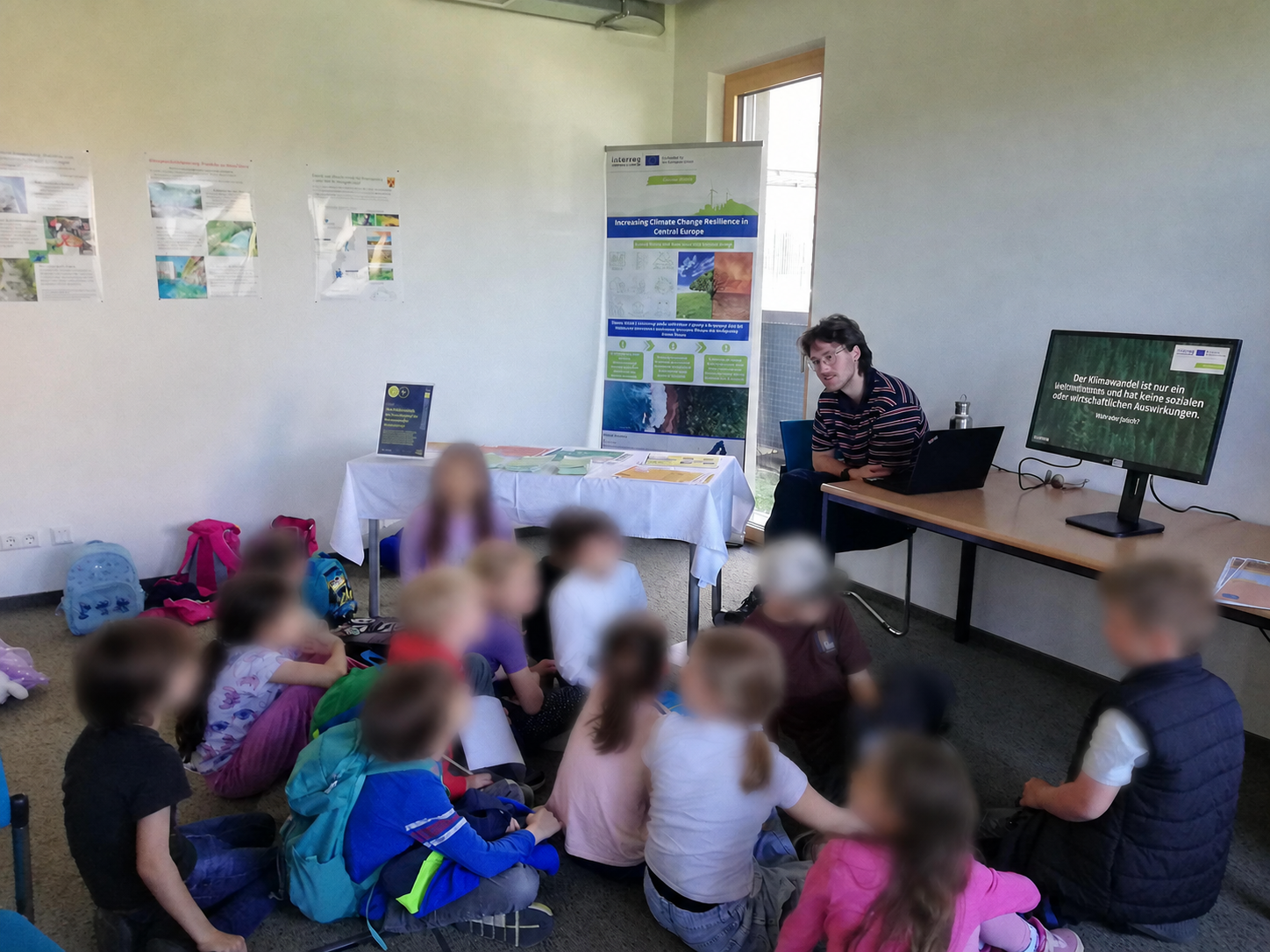
At this year’s Long Night of Research , Forschung Burgenland brought climate science to life for a younger audience by presenting its work on climate change adaptation in an engaging and accessible way. With a special focus on primary school children, the initiative aimed to spark curiosity while building awareness of one of the most pressing challenges of our time.
The interactive session combined a presentation with a quiz, inviting young visitors to actively participate rather than passively listen. Through this playful approach, children were introduced to key climate-related challenges such as heat and drought, flooding, and biodiversity loss. Complex topics were translated into age-appropriate language, ensuring that even the youngest participants could grasp the core ideas.
A central element of the activity was the use of maps and visual examples. These tools helped children explore how climate change affects different regions and environments. By seeing real-world scenarios, they gained a clearer understanding of how impacts can vary—and why adaptation strategies need to be tailored accordingly.
Beyond identifying problems, the session also highlighted solutions. Children were encouraged to think about what adaptation measures might look like in practice, from managing water resources to protecting ecosystems. This solution-oriented perspective empowered them to see climate action as something tangible and achievable.
The event also showcased the role of digital tools in climate planning and decision-making. By demonstrating how technology can support analysis and visualization, Forschung Burgenland illustrated how science and innovation work hand in hand to address environmental challenges.
Overall, the activity succeeded in raising awareness in a way that was both educational and enjoyable. By blending science with interaction and play, it left a lasting impression on its young audience—proving that it’s never too early to start understanding and shaping the future of our climate.