
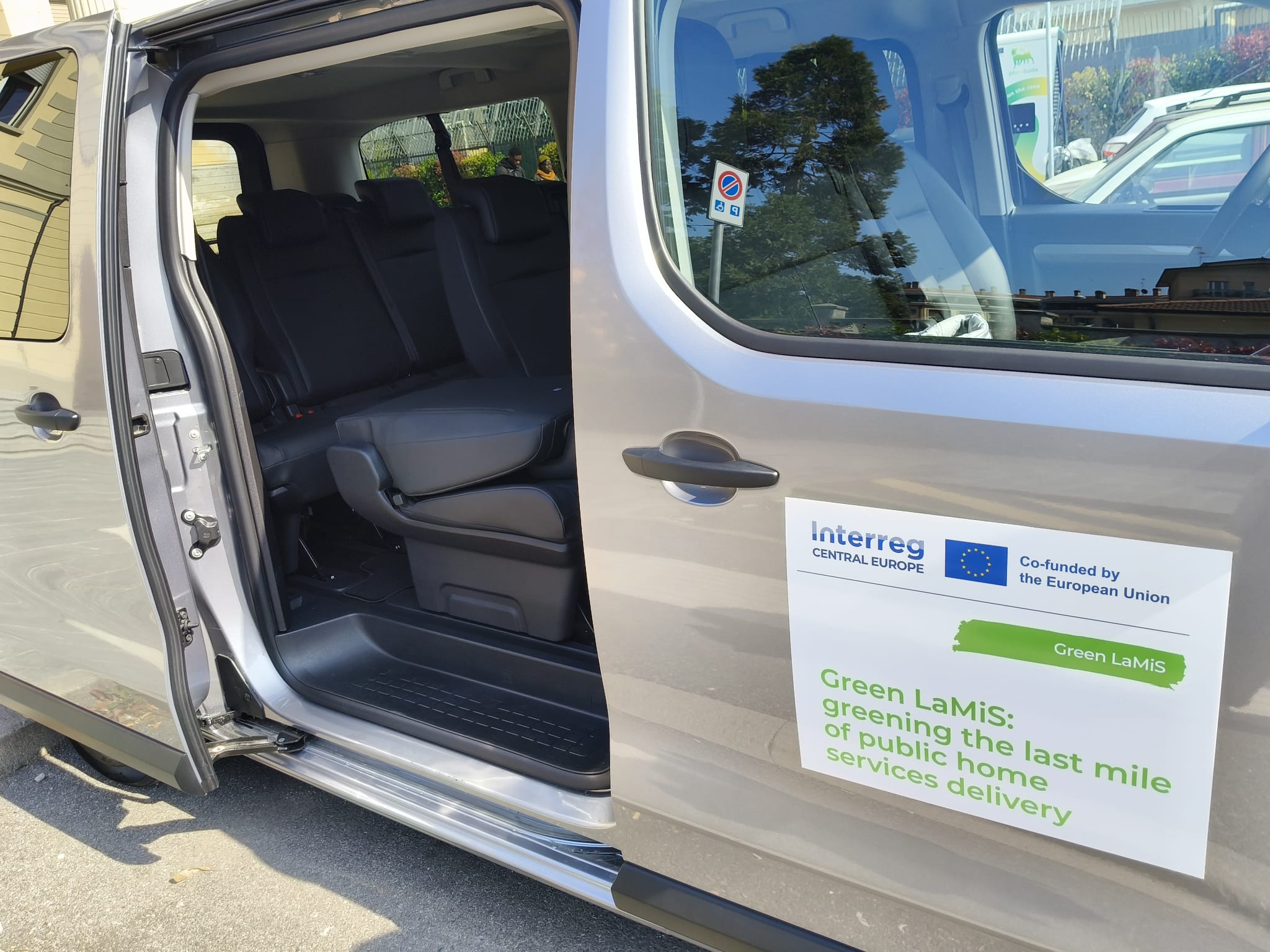
Sustainable urban mobility is no longer just about reducing traffic congestion or promoting public transport—it is increasingly about inclusivity, efficiency, and environmental responsibility across all sectors. One often overlooked domain is mobility related to Home and Daily Social Services (HDSS), such as home care, social assistance, and support for vulnerable populations.
A recent deliverable developed within the Green LaMiS project highlights how municipalities can integrate green mobility solutions into their existing Sustainable Urban Mobility Plans (SUMPs) without requiring structural changes to approved strategies.
SUMPs are designed to provide a comprehensive framework for urban transport systems, addressing infrastructure, public transport, safety, and environmental impacts.
However, HDSS mobility has traditionally been absent from these plans.
This gap exists for several reasons:
- HDSS mobility operates on a small, highly individualized scale.
- Data on social service transport is often fragmented or unavailable.
- Responsibility for HDSS lies outside traditional transport planning departments.
- Existing planning frameworks focus on large-scale mobility patterns rather than service-based operations.
As a result, a significant portion of urban mobility—particularly trips serving elderly, disabled, or vulnerable citizens—remains invisible in planning processes.
The Green LaMiS project proposes a practical, four-step methodology to bridge this gap:
- Identify HDSS mobility needs
Collect data on trips, routes, fleets, and service delivery patterns. - Map needs against existing SUMPs
Identify where HDSS is already indirectly covered and where gaps exist. - Translate project outputs into actionable measures
Align solutions such as electrification, micromobility, and routing tools with existing SUMP categories. - Develop city-specific integration notes
Provide tailored recommendations for municipalities without altering their approved plans.
This approach ensures compatibility with existing frameworks while enabling immediate application.
There are several priority pathways for integrating sustainability into social service mobility:
- Fleet Electrification & Optimization
Transition to electric or hybrid vehicles and optimize fleet usage. - Modal Shift
Promote walking, cycling, and micromobility for short-distance service delivery. - Infrastructure Development
Expand charging networks and support shared infrastructure. - Trip Optimization
Use digital tools to improve routing efficiency and reduce unnecessary travel. - Monitoring & KPIs
Track emissions, efficiency, and service quality through measurable indicators.
These measures not only reduce environmental impact but also improve service reliability and operational efficiency.
The methodology has been applied to three municipalities with different planning contexts:
- Szombathely (Hungary)
A well-developed SUMP exists, but HDSS mobility is only indirectly addressed. Green LaMiS provides tools to fill analytical, strategic, and operational gaps. - Bergamo (Italy)
The PUMS includes strong sustainability goals, yet lacks explicit consideration of social-service mobility. Integration focuses on aligning HDSS with existing measures like e-mobility and logistics. - Klis (Croatia)
Without a formal SUMP, integration occurs through alignment with broader development goals such as accessibility and social inclusion.
These examples demonstrate that HDSS integration is feasible across diverse planning environments.
Integrating green mobility into social services directly contributes to major European objectives, including:
- Climate neutrality targets under the European Green Deal
- Reduced emissions in line with the European Climate Law
- Improved accessibility and inclusion under the Urban Mobility Framework
- Progress toward UN Sustainable Development Goals
Beyond environmental benefits, the approach enhances quality of life, supports vulnerable populations, and strengthens the connection between social and mobility policies.
The inclusion of HDSS mobility represents a crucial evolution in sustainable urban planning. By making social service transport visible, measurable, and optimizable, municipalities can unlock new opportunities for efficiency, equity, and environmental impact.
The Green LaMiS methodology offers a scalable, practical solution—one that can be adopted across Europe to ensure that sustainable mobility truly serves all citizens.