
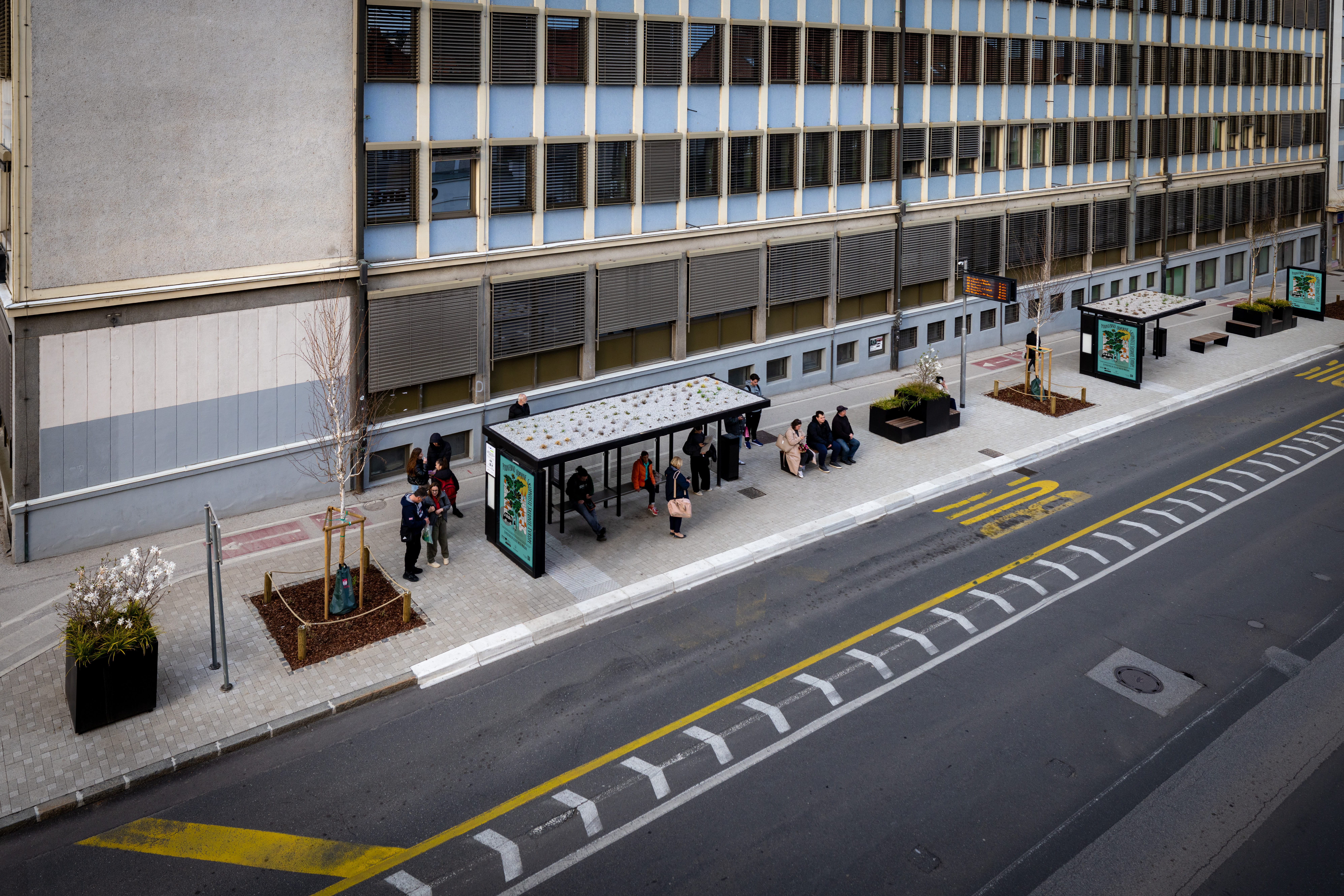
The Municipality of Maribor has successfully completed, within the framework of the Mission CE Climate project, a pilot greening of bus shelters at various locations, along with the comprehensive redevelopment of the Glavni trg – Elektro bus stop. The project represents a concrete example of how public space in the city center can be transformed into a more pleasant, functional, and climate-resilient environment.
The central focus of the project was the holistic redesign of the bus stop, involving a thorough spatial transformation. The area was newly structured by removing parts of the existing asphalt surfaces, introducing new paved areas, and clearly organizing the space for public transport users. Particular attention was given to the installation of high-quality urban equipment, including benches, planting containers, waste bins, and well-designed waiting areas, significantly enhancing the user experience.
A key element of the redevelopment is the implementation of nature-based solutions, especially green bus shelters. In addition to their aesthetic value, these contribute to reducing temperatures and mitigating heat stress. The green roofs of the shelters, together with additional planting and trees, create a more comfortable microclimate and improve overall urban living conditions.
The upgrade was not only spatial but also functional and technological. A microclimate monitoring system has been established at the site using sensors, with the Regional Development Agency for Podravje – Maribor participating in both setup and data monitoring. The sensors measure temperature, humidity, and other environmental parameters, and the collected data will serve as an important basis for planning future climate adaptation measures.
The comprehensive redevelopment of the Glavni trg – Elektro bus stop thus represents a significant shift in understanding public space as a multifunctional, well-designed, and user-oriented environment. The project demonstrates that, through a coordinated approach combining spatial planning, sustainable solutions, and user engagement, tangible improvements can be achieved even in relatively small yet heavily used urban areas.
The experience gained from the project will serve the Municipality of Maribor as a foundation for further upgrades of bus stops and other public spaces, with continued emphasis on a holistic approach, improved spatial quality, and strengthening the city’s climate resilience.