
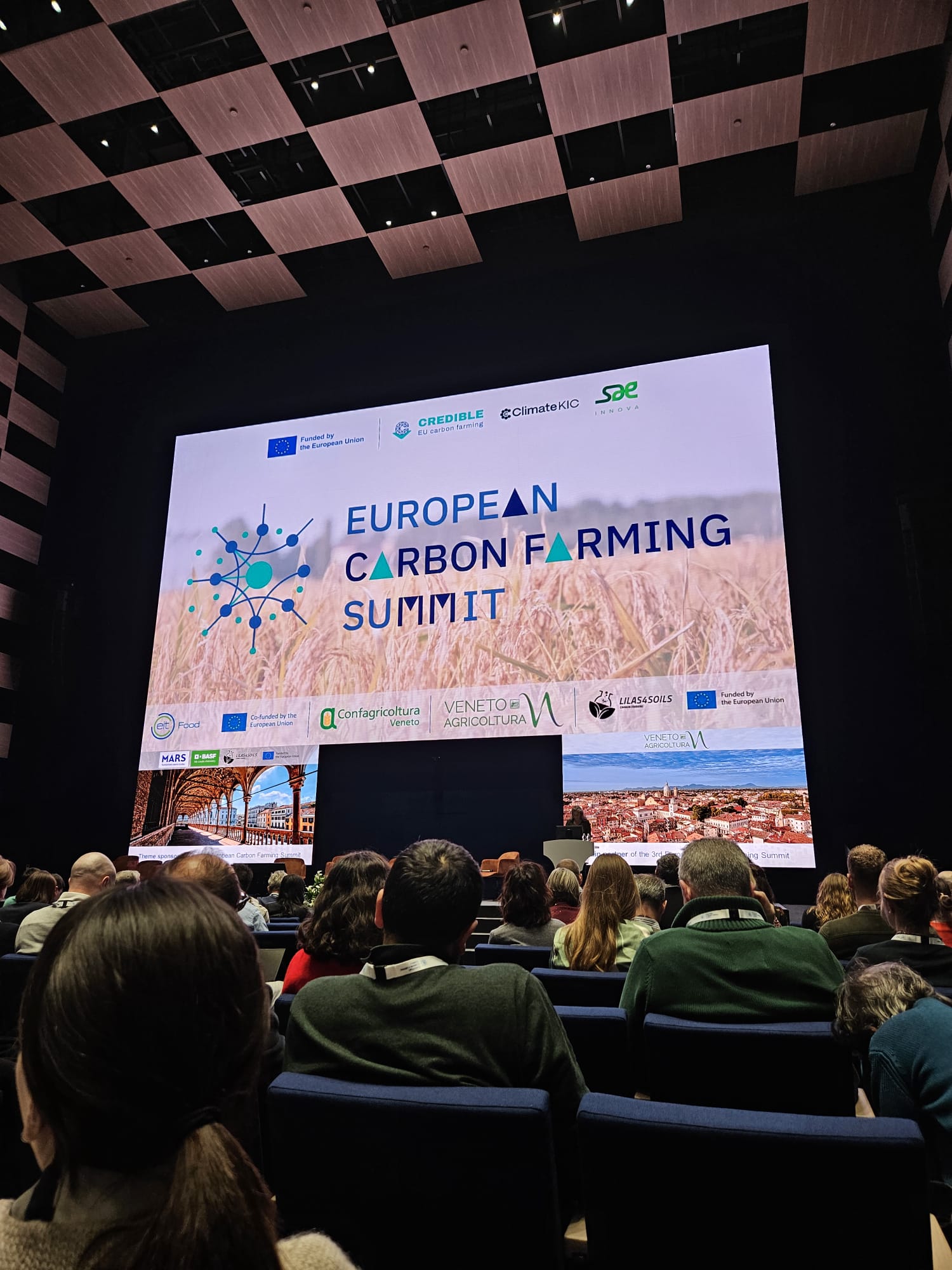
Agriculture is at a turning point. Across Europe, the question is no longer whether farming systems need to change, but how to make that change credible, measurable and sustainable for the farming sector. Carbon farming has emerged as one of the most discussed responses in the transition towards more climate-resilient agricultural systems. Approaches including improved soil management, agroforestry and regenerative agriculture are increasingly recognised for their capacity to expand carbon storage in soils and biomass, as well as for their positive effects on soil health, water retention and biodiversity.
The 3rd European Carbon Farming Summit, held in Padua from 17 to 19 March 2026, reflected both the progress made and the complexity ahead. Organised by SAE Innova and Climate KIC as part of the CREDIBLE project, the event gathered policymakers, researchers and practitioners around five core themes: moving from practice to impact, thinking beyond carbon, standards and ownership rights, financing carbon farming at scale, and building robust MRV systems.
One of the central messages to emerge was that credibility is the foundation of scale. Without trusted rules, clear incentives and consistent data, carbon farming cannot become a mainstream part of Europe’s climate strategy. The relevance of carbon farming extends to broader environmental and socio-economic dimensions: co-benefits for soil, water and biodiversity support more resilient production systems, creating new opportunities for farmers within emerging sustainability frameworks.
Several challenges remain. Robust monitoring, reporting and verification systems are essential to ensure the credibility of carbon farming initiatives. Clear regulatory frameworks and reliable methodologies are needed to integrate carbon farming into European policies, including the Common Agricultural Policy, in order to enable the development of transparent, trustworthy carbon markets.
Agri-Digital Growth operates in exactly this space, contributing to the transition by promoting digital technologies, data use and knowledge exchange mechanisms that connect research, innovation and agricultural practice, keeping technological development close to the concrete needs of the farming sector.