
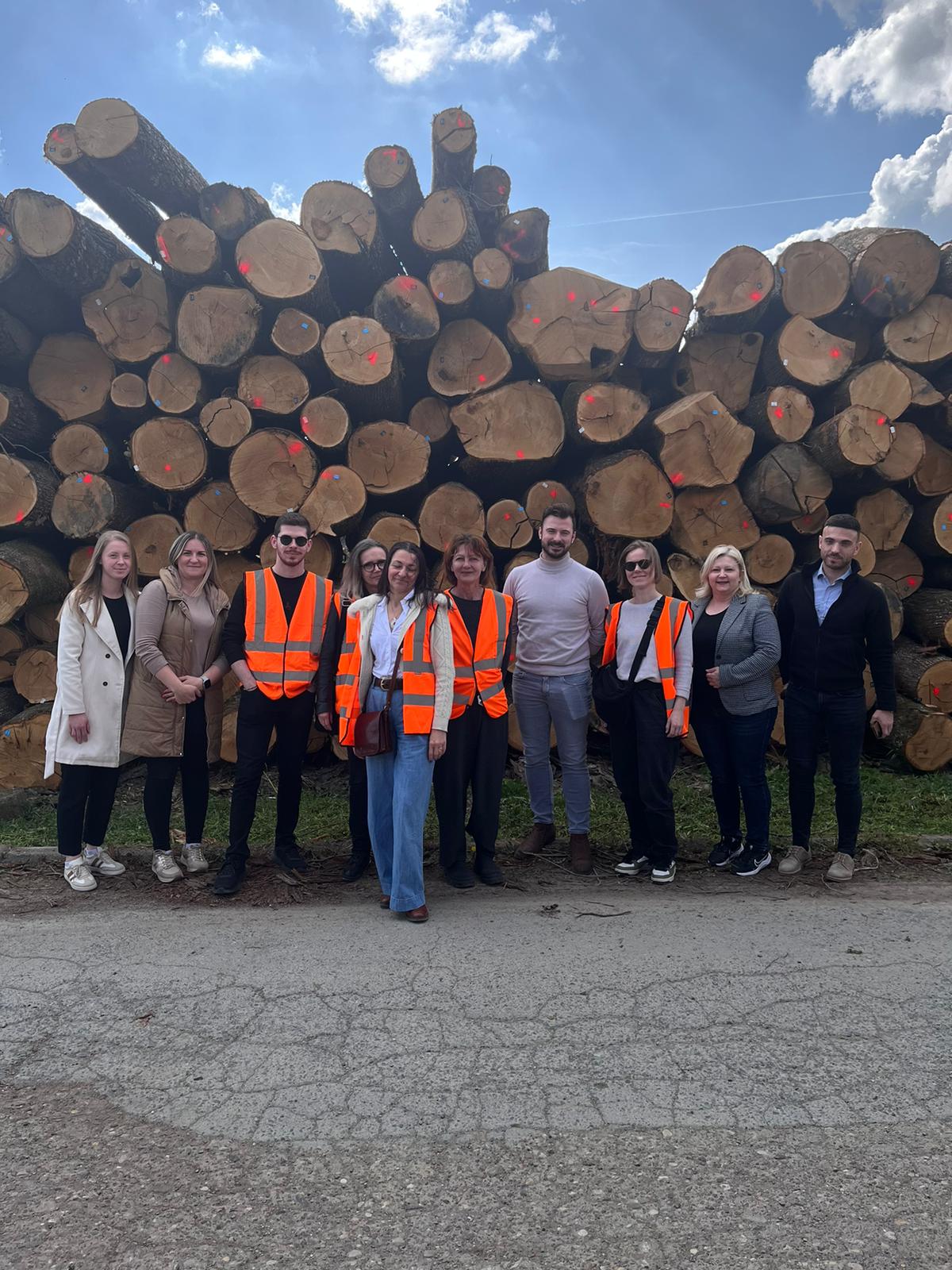
During these visits, participants gained valuable first-hand insights into the types of wood residues generated through industrial processes. These included materials such as particleboard, MDF, plywood, and solid wood residues from species like oak, beech, and ash. Beyond identifying materials, the visits emphasized critical factors such as volume, consistency of supply, and logistics of collection and reuse.
This hands-on approach enables craftsmen to more realistically assess how such materials can be integrated into their own production processes. At the same time, it opens up new opportunities for industry to explore innovative, sustainable business models based on resource sharing and collaboration.
The visits highlighted a strong interest among craftsmen in engaging with these collaborative models, alongside a clear need for more structured systems to support material exchange, information flow, and long-term partnerships.
The SYMCRAFT project therefore represents an important step toward building a sustainable, circular ecosystem, where industrial by-products are transformed into valuable resources, and cross-sector collaboration becomes a key driver of innovation and growth.
Through continued project activities, further strengthening of partnerships is expected, along with the development of new, high-value products that will enhance both the competitiveness of local craftsmen and the sustainability of industrial production.