
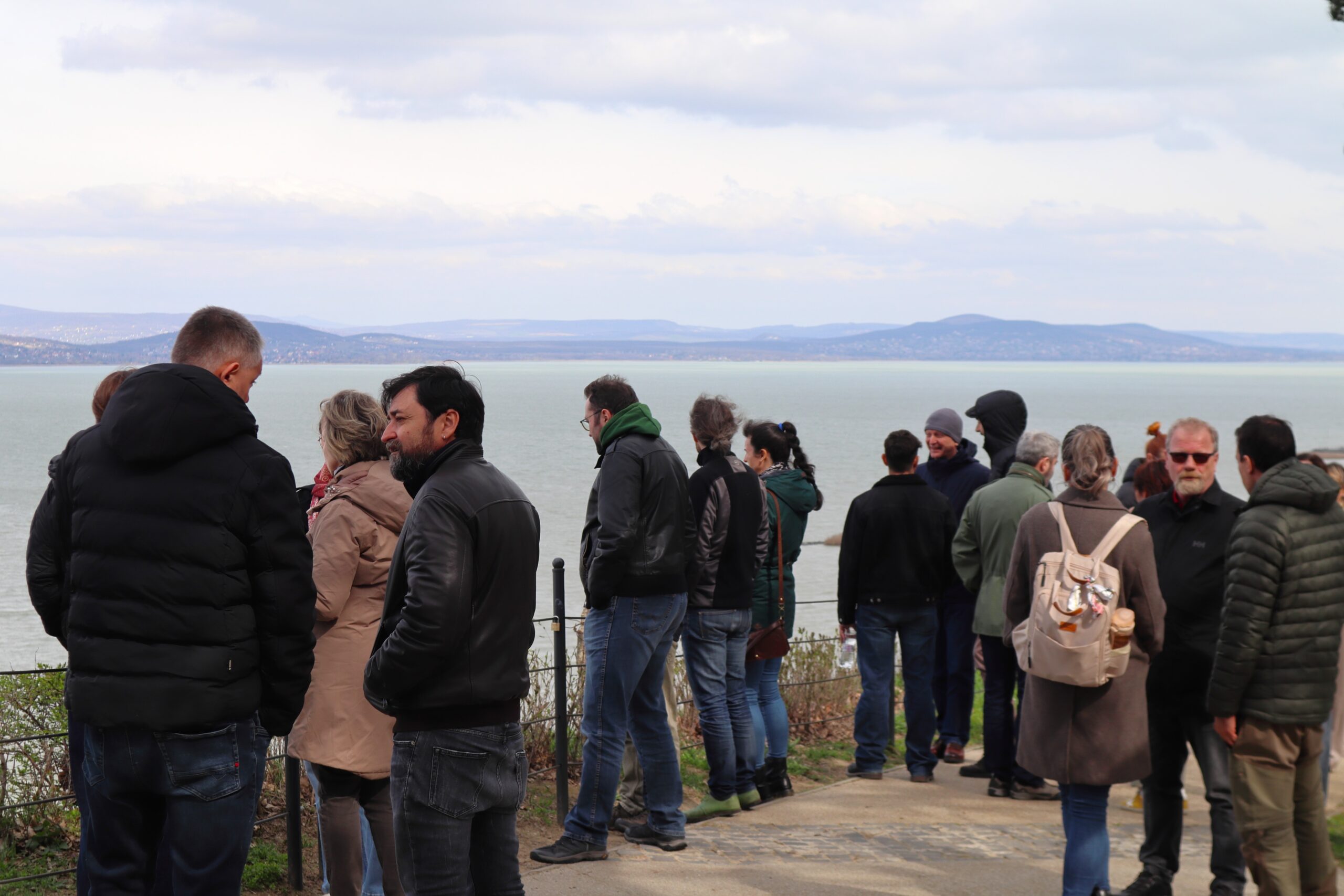
From March 17–19, 2026, the INACO project partners gathered for a meeting, combining a site-specific study visit with practical workshops.
Hosted in the Lake Balaton region of Hungary, the event brought together experts from across Europe to validate digital tools and strengthen strategies for protecting cultural and natural heritage against climate-induced hazards.
Study visit
The visit was hosted at the Fonyód pilot site, where partners observed the immediate impact of rapid coastal erosion caused by extreme weather events and precipitation. The itinerary also included a focus on the region’s rich history, including the Festetics Palace in Keszthely and a cultural landscape shaped by 2,000 years of winemaking traditions, providing a practical context for vulnerability assessments.
Stakeholder engagement
The primary goal of the meeting was the technical testing of the Risk Mapping Tool and the CNH-Care platform, which focuses on assessing the vulnerability of heritage sites to climate change.
A significant highlight was the active involvement of external stakeholders. By participating directly in the testing process, these stakeholders provided invaluable, real-world feedback. Their insights ensure that the tools are not only technically sound but also tailored to the practical needs of end-users and local authorities.
The three-day session resulted in:
-
Gathering critical feedback to finalize the digital platforms for wide-scale dissemination.
-
Co-developing risk management procedures and disaster scripts for cultural and natural heritage.
-
Networking and sharing local experiences to turn complex theoretical ideas into workable regional solutions.
This meeting marks the transition into the next phase of the project. The final step involves a concluding round of field tests conducted directly with residents and stakeholders in every participating country.