
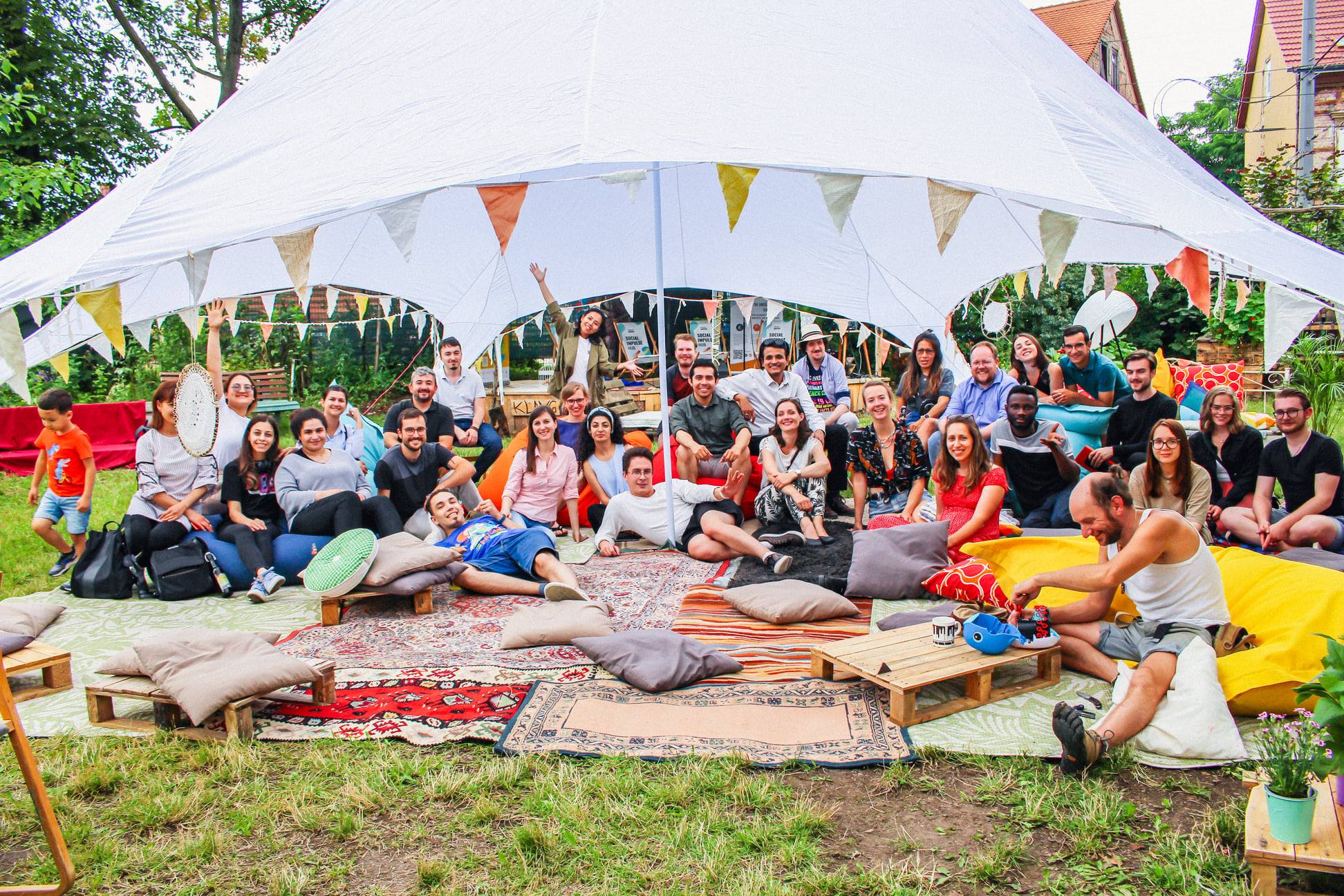
Youth are not only the beneficiaries of social innovation, but also, they act as the key drivers to it. As societies across Europe navigate complex social, economic and environmental challenges, the engagement of young people becomes an essential investment to long-term resilience, creativity and inclusive growth. Within the framework of the Interreg Central Europe project TASK4ISI, strengthening youth participation in social innovation is a strategic priority for building sustainable entrepreneurial ecosystems.
Youth act as catalysts for new perspectives in social innovation. Growing up in an increasingly digital, interconnected, and rapidly changing world, they approach challenges with openness, adaptability, and a willingness to experiment. They are more inclined to question established structures and explore alternative solutions, making them natural contributors to innovative thinking. Their cross-cultural awareness shapes not only how they communicate but also how they design solutions, often integrating sustainability, inclusion, and participation directly into their business models. This mindset aligns closely with what TASK4ISI aims to support as we work toward more inclusive entrepreneurial ecosystems across Europe.
What inspires us most is the strong sense of purpose that drives many young people, whether they are working on climate action, social inclusion, education, or community development. Their motivation often goes beyond financial return; they want to create something meaningful that responds to real needs. This purpose-driven approach leads to ventures that prioritize long‑term impact and community well-being. Through skills development, mentorship, and transnational exchange, programs like TASK4ISI help transform this motivation into sustainable initiatives, giving young people the tools and space to lead in ways that benefit entire communities
Involving youth in social innovation strengthens local and regional ecosystems by expanding networks, introducing new collaboration formats, and bridging sectors, generations, and communities. Their openness to peer learning and co‑creation fosters more participatory and dynamic innovation environments. At the same time, young people face structural barriers such as limited access to funding, professional networks, and decision‑making platforms. Addressing these challenges requires targeted support structures that empower youth not only to participate but to lead. TASK4ISI contributes to this by building competencies, facilitating knowledge exchange, and creating spaces where young voices are recognized as equal contributors.
Despite their potential, youth engagement in social innovation does not happen automatically; it requires access to resources, mentorship, and opportunities to take real responsibility. In our experience, organizations must balance guidance with autonomy to ensure participation goes beyond symbolic involvement. Supporting youth also demands flexibility and openness from institutions, as new ideas and approaches may challenge established practices—but embracing this dynamic is essential for fostering genuine innovation.
Investing in youth as active agents of change makes social innovation ecosystems more future‑oriented, inclusive, and adaptable, as with TASK4ISI where young people strengthen transnational collaboration, contribute to entrepreneurial models that reflect emerging societal needs, and bring the creativity, courage, digital competence, and social responsibility that are indispensable for building resilient communities across Central Europe. Within our consortium, the active engagement of young people is a key engine of social innovation, strengthening communities and shaping solutions that reach far beyond the scope of individual initiatives.
This publication has been developed within the CE0200771 TASK4ISI project, supported by the Interreg CENTRAL EUROPE Programme with co-financing from the European Union. Its content is the sole responsibility of the authors and the project partnership and does not necessarily reflect the views or positions of the Interreg CENTRAL EUROPE Programme, its programme bodies or the European Union. Neither the programme authorities nor the European Union can be held responsible for any use that may be made of the information contained herein.