
Interreg CENTRAL EUROPE projects are often designed to do one thing particularly well: test solutions in real conditions so that public authorities can decide what works, what needs adjustment, and what is worth scaling up. This was the main takeaway from the presentation of the EfficienCE project to the Committee on European and International Affairs of the City of Vienna on 27 January 2026.
A pilot that tested feasibility and “readiness to scale”
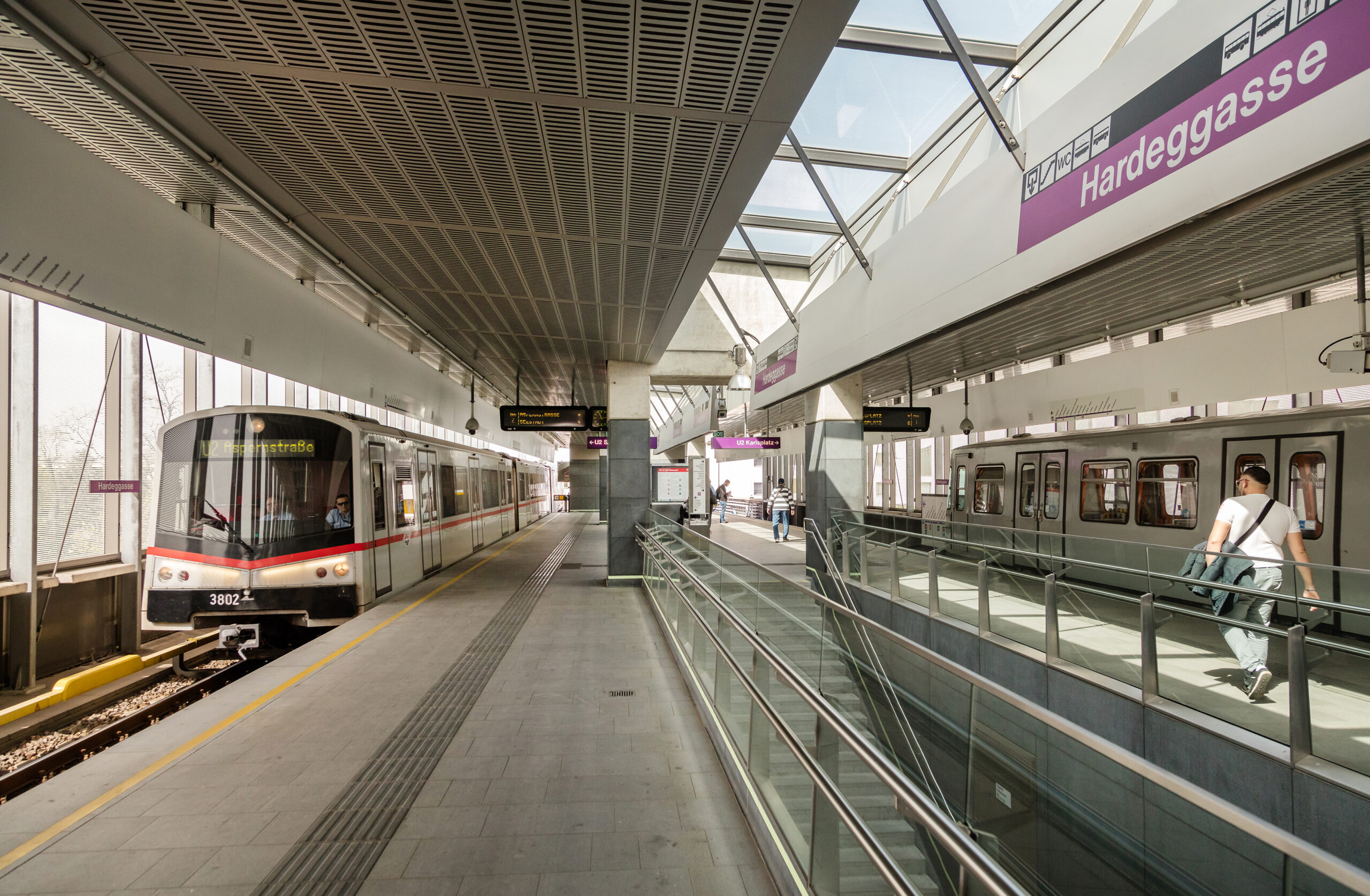
The project EfficienCE explored how innovative photovoltaic (PV) systems can be integrated into existing urban transport infrastructure. In Vienna, the pilot installation was implemented in 2020 at a metro station operated by Wiener Linien, in cooperation with Wien Energie GmbH. Importantly, the pilot was not only about technical performance. Project partners also looked at practical conditions that typically determine whether a solution can move beyond a one-off demonstration, such as legal questions, organisational set-up, and economic considerations. For public authorities, this kind of structured testing can reduce uncertainty and support more confident investment decisions.
From pilot to wider implementation
The committee discussion highlighted a clear “from pilot to impact” logic: a controlled pilot can help de-risk decisions and inspire broader roll-out. Since the project’s closure, Vienna has expanded PV installations across its metro infrastructure. Today, 27 photovoltaic installations are in place, generating around 5.7 million kWh per year – roughly the annual electricity consumption of about 2,850 households.
While the rollout itself goes beyond the project, EfficienCE helped demonstrate feasibility in an operational context and contributed to the evidence base that public actors need when planning larger investments.
Why this matters for policymakers
EfficienCE is a useful example of what transnational cooperation can deliver when it is designed as a testing ground:
- Piloting new approaches under real-life operational conditions
- Reducing implementation risk by identifying technical, regulatory and organisational requirements early
- Supporting uptake by helping authorities move from an informed pilot to larger deployment decisions
Vienna’s experience shows how a tested solution, validated in practice and supported by transnational exchange, can help shape wider implementation on public infrastructure beyond the project lifetime.