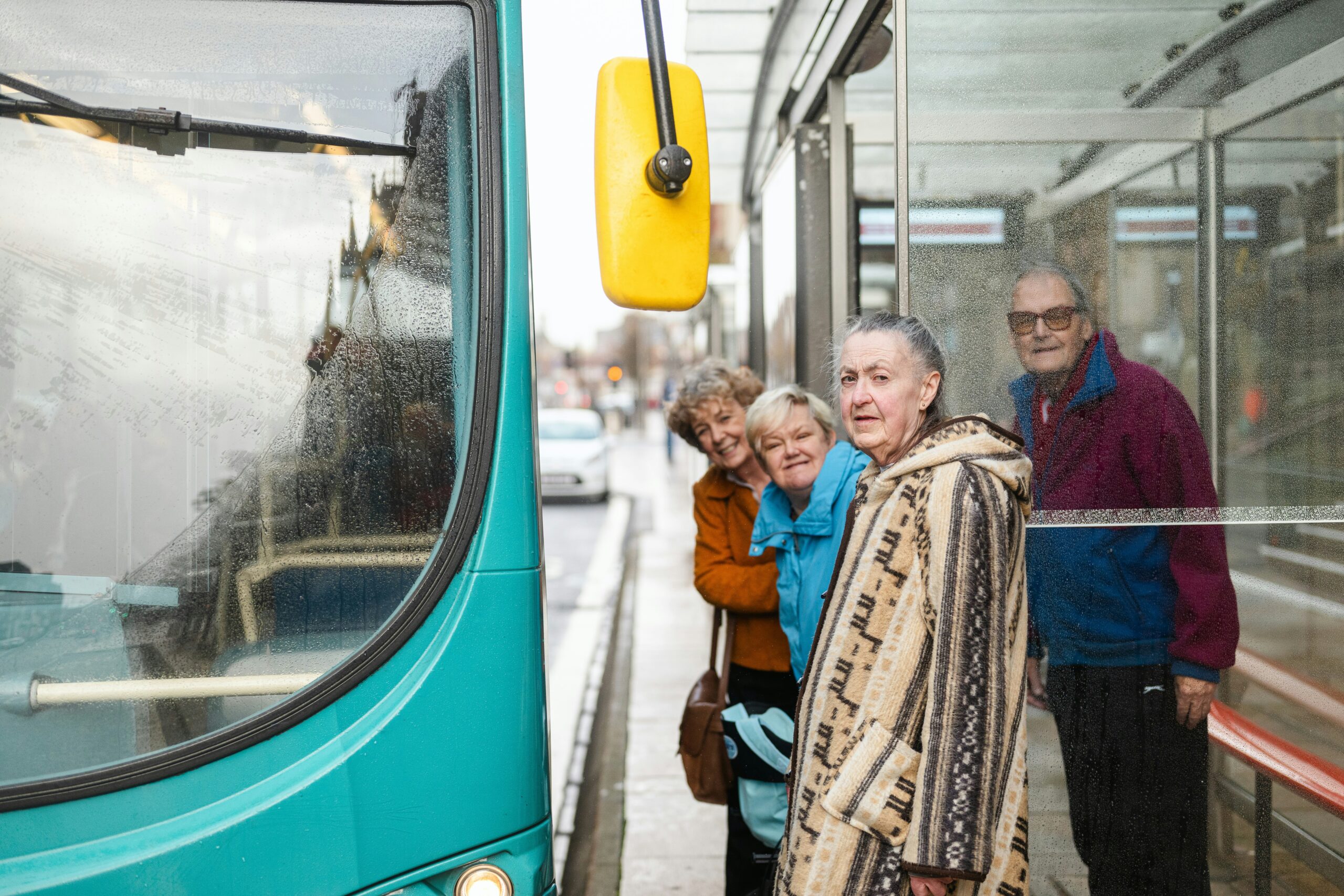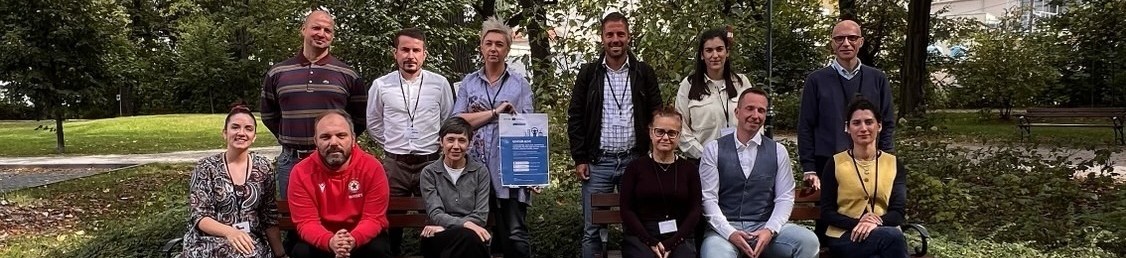
Woman on the bus stop in the rural area
Amel Majanovic Unsplash

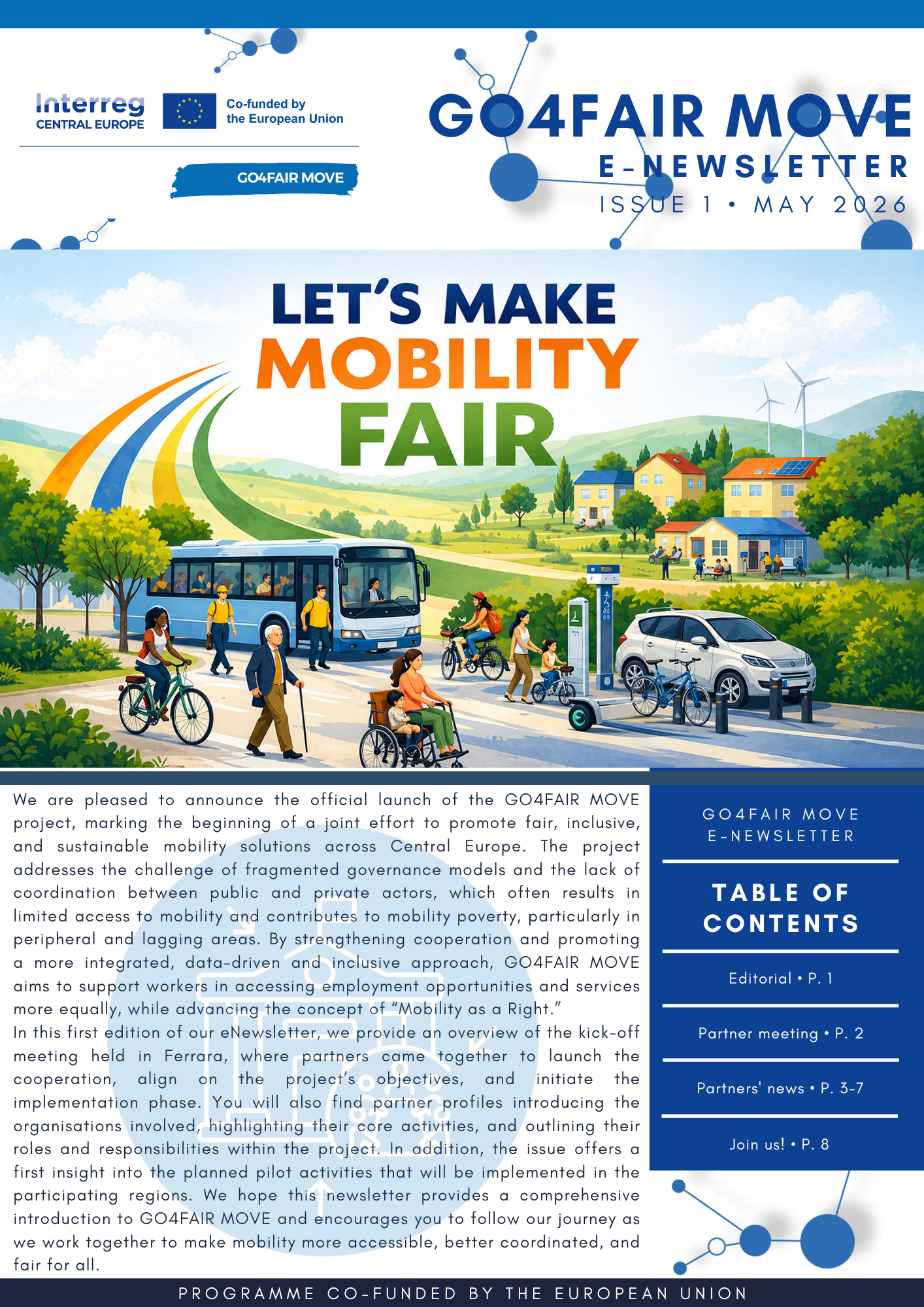
GO4FAIR MOVE

Project overview

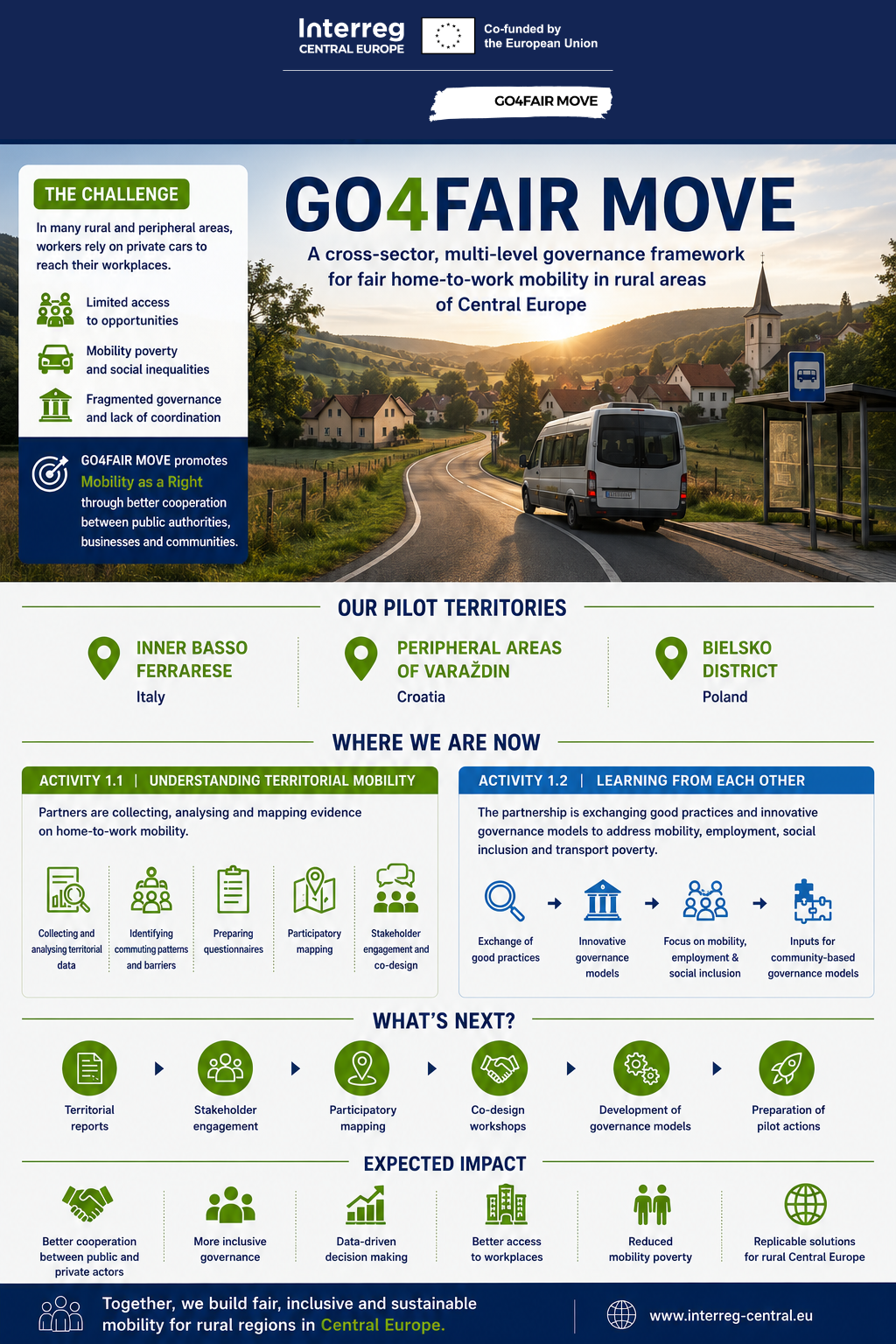
A cross-sector, multi-level GOvernance framework for FAiR home-to-work mobility in rural areas of central Europe

In many lagging regions, workers depend on private cars because public and employer-based transport offers are fragmented and poorly coordinated, creating mobility poverty. GO4FAiR MOVE aims to make “mobility as a right” a reality. Partners build multi-level governance models linking municipalities, regions, operators and employers, use participatory data mapping and inclusive planning to design and test new cooperation schemes and produce replicable frameworks that improve commuting options and reduce inequalities.

0,80m €

Project Budget

80%

of the Budget is funded by ERDF

Layer 1

4

Countries

4

Regions

6

Partners

3

Pilots

Duration

Start date

End date

Project progress

2%

Project partnership

Project partners

Italia (IT)

Lead partner

Province of Ferrara

Public Works, Territorial Planning and Mobility Department
Address
Corso Isonzo 26
44121 Ferrara
Country
Italy (IT)
Web
https://www.provincia.fe.it/

Project partner

Address
Viale Aldo Moro 38
40127 Bologna
Country
Italy (IT)
Web
www.fondazioneitl.org
Total partner budget
150,750 €
Address
Trg bana Jelačića 17
42000 Varaždin
Country
Croatia (HR)
Web
www.dan.hr
Total partner budget
148,250 €
Address
Pihenő 35
6728 Szeged
Country
Hungary (HU)
Web
https://emfie.eu/
Total partner budget
120,250 €
Address
PIASTOWSKA 40
43300 BIELSKO-BIAŁA
Country
Poland (PL)
Web
www.powiat.bielsko.pl
Total partner budget
87,500 €
n.a.
Address
Partyzantów 59
43-300 Bielsko-Biała
Country
Poland (PL)
Web
www.arrsa.pl
Total partner budget
88,750 €

Roadmap

1

Specific problem

The territorial challenges GO4FAIR MOVE will tackle are: 1. The low accessibility of fair and efficient home-to-work mobility services, which hinders employment opportunities and economic development, exacerbates social and economic disparities. 2. Fragmented governance models and a lack of coordination among stakeholders, which limit the capacity to effectively address accessibility needs. As a result, these territories often rely on private cars to reach workplaces, disadvantaging individuals without access to them (leading to transport poverty and associated effects, such as social exclusion) and reducing the attractiveness of the local economy. This is a common challenge for rural areas in CE. Traditional transport services typically provide access only to major public facilities (e.g. hospitals and schools), due to the high operational costs of long-distance routes in low-demand areas. Even flexible mobility solutions, such as Demand-Responsive Transport (DRT), although commonly adopted in such contexts, are not financially sustainable, particularly when relying solely on public funding.

2

Main objective

Overall objective is to move beyond to an integrated multilevel governance approach focused on the “Mobility-As-A-Right” concept, in particular for the sustainable accessibility of workplaces via public transport services and non-conventional means. This process will enable more equal opportunities in particular via access to mobility, for workers living in rural and lagging areas

3

Our approach

The GO4FAIR MOVE project is driven by the concept of "Mobility-As-A-Right," emphasizing that equitable access to workplaces through accessible transport is essential for promoting social inclusion and economic opportunity. Central to the project is an “i.integrated multilevel governance framework” that brings together diverse stakeholders across various administrative levels and sectors. Local authorities play a pivotal role in identifying and addressing mobility gaps specific to their territories, while regional bodies provide policy alignment and financial support. A hallmark of the GO4FAIR MOVE approach is its reliance on ii.Public-Private-Civic Partnerships (PPCPs). These partnerships are instrumental in pooling resources, expertise, and commitment from public authorities, private companies, and civic organizations. By involving the private sector in the cofinancing and co-development of mobility solutions, the project ensures that investments directly address workforce accessibility challenges. This collaborative model is especially crucial in combating transport poverty, a persistent issue in rural areas, where traditional public transport services are often inadequate. The use of iii.data-driven methodologies (as PPGIS) further strengthens GO4FAIR MOVE’s ability to address the needs of targeted territories. Through comprehensive needs assessments and real-time data analysis, the project tailors interventions to local realities while enabling continuous monitoring and refinement. This evidence-based approach ensures that resources are directed where they are most needed and that the impact of implemented solutions is measurable. Recognizing the limitations of conventional public transport in low-density areas, GO4FAIR MOVE promotes non-conventional and innovative transport solutions that not only expand coverage but also foster cost-efficiency and environmental sustainability, addressing key barriers to mobility in rural and lagging areas.

4

Impact, solution

The added value of GO4FAIR MOVE lies in integrating flexible operational solutions into innovative governance models, addressing diverse structures in recognised lagging areas directly involved in project activities. Moreover, while many projects and research studies have examined rural accessibility in terms of improved solutions for residents and tourists, the specific topic of home-towork mobility governance has been less explored, especially linked to employment and social challenges.

Pilot actions

Outputs
O.1.2 GO4FAIR MOVE strategy for integrated development and sustainable accessibility of rural areas.

The GO4FAIR MOVE strategy will be based on the outcomes of the activities jointly implemented by all partners in WP1 and WP2, embedding methods and approaches applied to define a common long-term vision for a place-based integrated development of the overall rural areas, leveraging structural synergies between employment, social, economic, and transport policies and quality partnerships for collaborative mobility-to-work management. This output will be also linked to Deliverable D1.3.1 outcomes.
Type of output: Strategies and action plans
In development

O.2.2 GO4FAIR MOVE solutions for integrated development and sustainable accessibility of rural areas

Partners will jointly develop three solutions and validate them in pilots in Basso Ferrarese, Bielsko District and Varazdin (O2.1). O2.2 will draw on D2.1.1 (feasibility studies for the three pilots using common templates, indicators and assumptions) including operational requirements for implementation and monitoring. Solutions: a CMM platform, a Mobility Data-Sharing platform, and a PPCP; with take-up plans integrated into O2.3.
Type of output: Solutions
In development

O.2.3 GO4FAIR MOVE collaborative mobility-to-work management programmes for integrated development and sustainable accessibility of rural areas

GO4FAIR MOVE’s collaborative mobility-to-work programmes for the three areas translate the strategy into action via mid-term operational plans that integrate the innovative solutions developed and tested (O2.2) with wider policy and planning tools. O2.3 will draw on D2.1.2, which will detail the jointly developed programmes, translating the strategy into mid-term actions for all three areas and incorporating the solutions piloted across GO4FAIR MOVE.
Type of output: Strategies and action plans
In development

GO4FAIR MOVE

The project lead partner is responsible for the content of this project website.